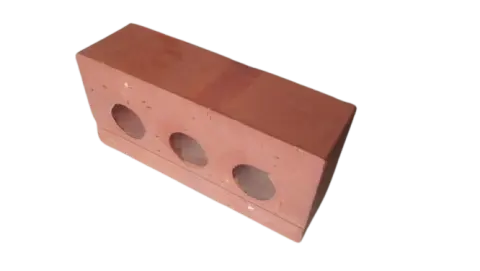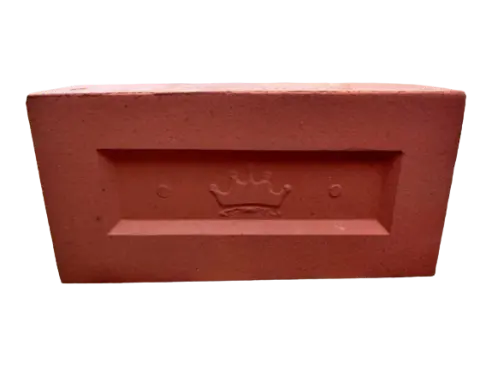
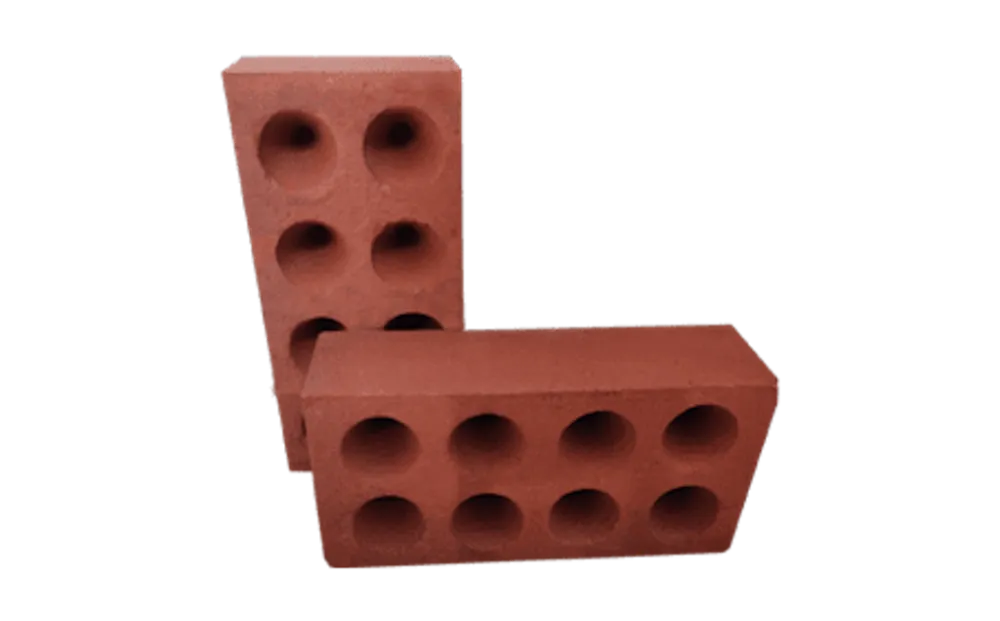
Our 3 hole and 8 hole bricks come off the same extruder at the same 229 × 110 × 70 mm size. A mason can lay them in the same wall without changing the coursing. So why make two? Because the cores change how heavy the brick is and how it behaves in different parts of a building.
The 3 hole wire cut brick
Three large round cores run through the bed face. They are hidden once the brick is laid, so the visible faces are solid clay. This is the brick most buyers pick for:
- exposed house fronts and gate pillars
- boundary and compound walls
- general load-bearing walls in houses
The 8 hole wire cut brick
Eight smaller cores take out more clay, so the brick carries more trapped air. That has two effects: the wall weighs less per square metre, and the air in the cores slows heat passing through the wall. Builders reach for it on:
- partition walls inside flats
- parapets and walls on upper floors
- infill panels in an RCC frame
Mortar and cores
Some mortar pushes into the cores as the brick is bedded. That gives a mechanical key, which helps the wall hold together, but it also means a perforated brick uses a little more mortar than a solid one. Do not try to fill the cores on purpose; a normal full bed joint is enough.
Brick count
The count per square metre is the same for both, because it depends on the face size and the joint, not on the cores. For our brick with 10 mm joints that is about 52 per m² in a 4.5 inch wall and about 104 per m² in a 9 inch wall. Add 3 to 5 percent for breakage and cuts.
Which to order
If the wall will be seen, or it carries a floor above, start with the 3 hole brick. If it is an inside partition or sits on a slab, the 8 hole brick is the lighter choice. When in doubt, ask your structural engineer and share the wall drawing with us; we will quote both. See the full range on the perforated wire cut bricks page.